

Sachin Tendulkar, Virat Kohli, Katrina Kaif, Ranbir Kapoor and Alia Bhat all turned up at the 13th edition of the gala car fair.

Take out Maruti Suzuki and Honda, and the auto sector's prospects suddenly don't look all that rosy.

In doing so, Bajaj has become the first internal combustion engine two-wheeler company to launch an all-electric two-wheeler in India.

The Hero Splendor Pro Classic is the cheapest way to turn heads on a motorcycle, says Faisal Ali Khan
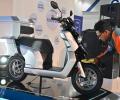
Seven electric two-wheeler companies have suffered a cumulative loss of over Rs 9,000 crore on account of unpaid dues and loss of market after their subsidies were stopped last year, the Society of Manufacturers of Electric Vehicles (SMEV) said on Wednesday. These companies have also been directed by the govt to refund the subsidies availed by them. The audit by SMEV's chartered accountants indicates the total, cumulative damages to affected companies could account for over Rs 9,000 crore on a conservative basis, it noted.
Keen competition will make the going tough even for market leaders in the segment.

Higher input cost is likely to weigh on Auto sector's Q4 numbers.

Passenger vehicle wholesale in India increased by 14.19 per cent to 3,10,294 units in October against 2,71,737 units in the same month last year as companies despatched more units to dealers to cater to enhanced demand in the festive season, auto industry body SIAM said on Wednesday. According to the latest data by the Society of Indian Automobile Manufacturers (SIAM), two-wheeler sales also rose 16.88 per cent to 20,53,814 units, compared with 17,57,180 units in the same month last year. Motorcycle sales were at 13,82,749 units as against 11,16,886 units in October 2019, up 23.8 per cent.

The Hero Splendor Pro shall continue being the legend it always was and bike fanatics like us will simply keep passing its fables from one generation to another. A great bike to ride, a greater bike to own and at Rs 52,000 it can't get any more affordable be it the cost, reliability and mileage.

The Hero Electric Cruz is a good electric vehicle, but has a few more boxes to be ticked for it to be accepted by the masses.

Passenger vehicle wholesales in India increased by 12.73 per cent to 285,367 units in November as against 253,139 units in the same month last year riding on the back of festive demand, auto industry body SIAM said on Friday. According to the latest data by the Society of Indian Automobile Manufacturers (SIAM), two-wheeler sales rose 13.43 per cent to 16,00,379 units, compared with 14,10,939 units in the same month last year.
India's biggest motorcycle maker Hero Honda Motors on Thursday said its sales grew by 23.4 per cent during 2003-04 over the previous fiscal.

Excise duty on small cars, motorcycles and SUVs was reduced.

Auto Expo 2023 may not trigger a fresh rally in automobile stocks, say analysts, as this year's edition lacks participation from major listed players. It is also owing to the focus on electric vehicles (EVs), a segment where four-wheelers have minuscule market share. "In the passenger vehicles (PV) segment, Maruti Suzuki India and Tata Motors are the only listed players.
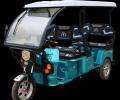
A series of flip-flop on policies and a non-existent charging infrastructure are the biggest challenge in achieving the target of selling 6-7 million hybrid and electric vehicles by 2020.

SoftBank-backed Ola Electric took the wraps off its maiden e-scooter offerings -- Ola S1 and S1 Pro -- for a commercial launch on Sunday. With prices starting from Rs 99,999 (excluding state government incentives, registration fee, and insurance cost), the Bhavesh Aggarwal-founded firm said the e-scooters are designed and engineered in India for the world and will deliver the best scooter experience to the consumer. He suggested that after 2025, sale of petrol-powered two-wheelers should not be allowed.

Leading automakers Maruti Suzuki, Hyundai and Tata Motors on Thursday reported robust sales in March as a shift towards personal mobility and pent up demand continued to help companies push dispatches to their respective retail partners. Toyota Kirloskar Motor, Honda Cars and Mahindra and Mahindra (M&M) also reported strong sales last month as compared to the year-ago period, when dispatches were adversely impacted due to the impending transition to BSVI from April 2020 and the nationwide lockdown to contain the coronavirus pandemic. The country's largest carmaker Maruti Suzuki India said its domestic sales stood at 1,49,518 units last month. The auto major had reported sales of 76,976 units in March 2020.

Honda Motorcycle and Scooter India (HMSI), India's second-largest two-wheeler maker, on Wednesday revealed its electric vehicle (EV) roadmap, which includes setting up a dedicated EV factory, launching the first two EVs in 2023-24, and establishing 6,000 battery exchange points in the country. HMSI plans to establish a specialised unit for the manufacturing of electric vehicles (EVs), named 'Factory E', at its Narsapura plant located in Karnataka. Factory E will be created by converting an existing production line that currently manufactures internal combustion engine (ICE) vehicles, said Atsushi Ogata, HMSI managing director and chief executive officer.
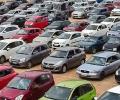
Leading automakers Maruti Suzuki India, Hyundai Motor, Kia Motors and Tata Motors reported sales growth in the domestic market in November, aided by robust offtakes amid the festival season. While Maruti Suzuki India reported marginal growth, Hyundai logged in its highest ever monthly sales in November. Others like Honda Cars India, Toyota Kirloskar Motor, Mahindra & Mahindra and MG Motor India also reported sales growth in November as compared with the same month last year.

The increase in PV sales in September was driven by festive season purchases, with SUV models like Maruti Suzuki's Brezza, Hyundai Creta, Mahindra Scorpio, Ford Ecosport and Honda W-RV witnessing good traction

The two-wheeler segment is, however, still far from its H1FY19 peak of 9.7 million units

The country saw a massive year-on-year surge in the demand for electric vehicles, with retail sales of electric two-wheelers rising by 58 per cent, passenger vehicles by 130 per cent, three-wheelers by 82 per cent, and commercial vehicles by 171 per cent in March 2023, according to the data shared by the Federation of Automobile Dealers Associations (Fada). According to a report by JMK Research, the EV segment as a whole grew by 157 per cent during FY23, to 1,180,597 units, from 458,746 units a year ago. Overall, EV sales in March 2023 rose by 82 per cent from the March 2022 figure, the JMK report added.

TVS should be prepared for a rough ride as Bajaj Dominar, Mahindra Mojo, Royal Enfield Classic 350 and many others are stepping on the gas for a slice of this category.

Experts attribute the high valuation of Indian auto makers to the faster growth in India compared to the rest of the world.

Pilot project in Bengaluru; Snapdeal got into the category last month

Falling margins, high inflation pitting workers against management.

The automobile sector is considered a good indicator of economic health. It has a very long value chain, from primary materials, like metals, glass and plastic, to value-added high-end electronic components, specialised alloys, and software.

Hero MotoCorp, Honda Motorcycles, Scooters India, TVS, Honda India, Toyota Kirloskar Motor, Ford, Nissan, Ashok Leyland are all giving the Auto Expo a miss this time.

Passenger vehicle wholesales in India rose by 14.16 per cent in August to 2,15,916 units, driven by pent-up demand, industry body SIAM said on Friday. According to the latest data by the Society of Indian Automobile Manufacturers, passenger vehicle wholesales stood at 1,89,129 units in the same month last year.
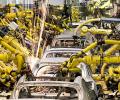
The sharp increase in commodity prices on account of the Russia-Ukraine war has put automakers in a fix. After the frequent price hikes in the current fiscal, manufacturers fear that any more price increases may further dent the already weak demand in certain segments. "We have taken several hikes and cannot immediately do it again. "We will have to closely watch the situation and act accordingly," said an official at an auto firm, declining to be identified. Even for companies like Tata Motors Passenger Vehicles, which has had a strong volume run and a robust order book, passing on the entire costs has been tough.

Reflecting the woes of the Indian automobile industry, the country's car exports remained flat at 550,466 units in 2013-14, during which domestic sales fell for the second consecutive year.

Combined net profit estimated to grow 14.6% year-on-year, against a 5.7% decline in the Dec 2015 quarter
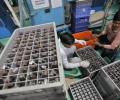
The strike, however, had no impact on production of auto majors Maruti Suzuki India, Hero MotoCorp, Honda Cars India, Mahindra & Mahindra, Tata Motors and Hyundai Motors India as their plants in various parts of the country functioned normally.
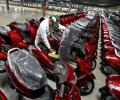
What has hit sentiment further is a draft proposal by the government to increase vehicle insurance premiums for financial year 2022-23 (FY23). Third-party motor insurance premiums have not been increased over the last two years and if this is approved, insurance costs for specific segments could rise by a fifth. The worst impacted is the 350cc and above two-wheeler segment, where premiums are up 21 per cent. Royal Enfield (Eicher Motor) is the market leader in the segment. The premiums in the 150-350cc two-wheeler category are also being inc
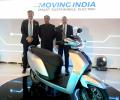
With its new premium Primus and Ampere NXG, it is targeting buyers seeking a faster and more stylish ride

The 30-share Sensex ended up 204 points at 27,215 and the 50-share Nifty ended up 59 points at 8,238.

Vehicle sales across categories registered a decline of 8.62 per cent to 20,86,358 units from 22,83,262 units in May 2018.

The challenges of transition to stricter emission norm BS-VI from BS-IV and compliance to new safety norms thereby making vehicles costlier are lurking around the sector.
 © 2026 Rediff.com - Advertise with us - Disclaimer - Privacy Policy - Sitemap - Feedback - About us - Terms of use - Grievances